WATER IN BIRTH
Content Notice: Please note this article below contains information about childbirth. For some people, childbirth is associated with traumatic memories. If anything conveyed in this article touches a sensitive place for you, please know there are therapeutic support options to heal and process past birth experiences or perinatal loss.
WATER
Our first environment
Our bodies have a primal and essential relationship to water. Water is our first environment from which we were created and were bathed in whilst growing in our mama’s womb. We are also created with a diving reflex suited to aquatic environments. Babies at birth are known to have the highest water content of any age stage, approximately 75 – 80 % (Young et al, 2021).
Throughout humanities existence we have searched after water, created our civilisations around water, and used water to heal our bodies. Water also carries deep symbolic and spiritual meanings for our life. Many myths, cultures, spiritual and religious traditions around the world have named Deities after water, and spoken about the importance of water in various ways. Below is a painting of Yemayá, Goddess of the Ocean and Rivers from Yoruba Religion of West Africa. She has spread to many lands, known for her motherly protection and care of all children.
“And we made from water every living thing”
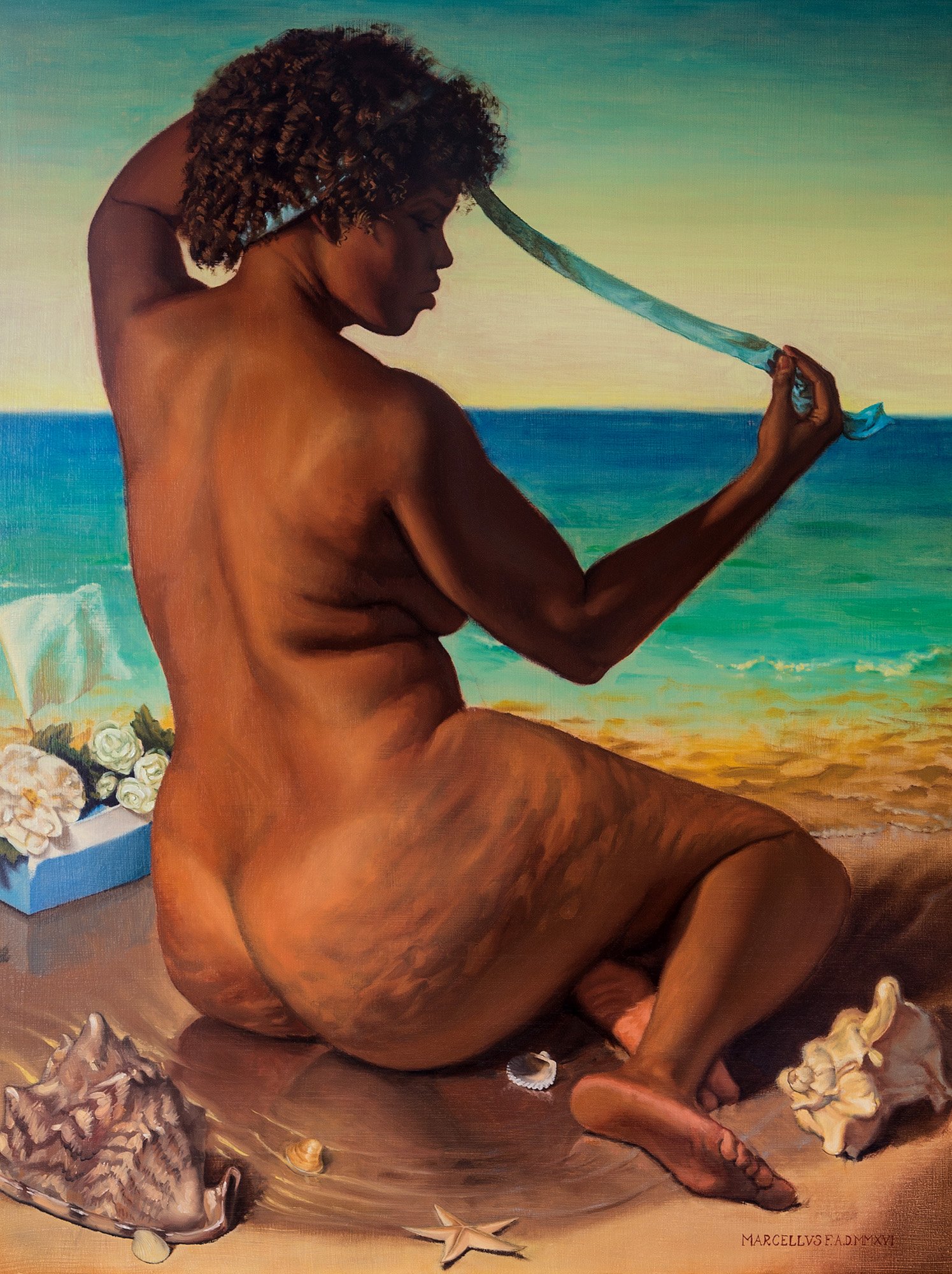
Oil painting by Marcelo Jorge , 2016. Wikimedia Creative Commons.
“The mythic imagery of water is connected with our earliest bodily experiences and the exquisite sensations of being soothed, lulled, refreshed, protected, and cleansed ”
The Water Archetype
EMOTIONS AND THE UNCONSCIOUS
Water is an archetype which Carl Jung understood to be connected to our emotions, the deep terrain of the unconscious and underworld. Water is often associated with what we fear, and also with our grief and sorrow through the watery symbol that is our tears.
PURIFICATION AND REBIRTH
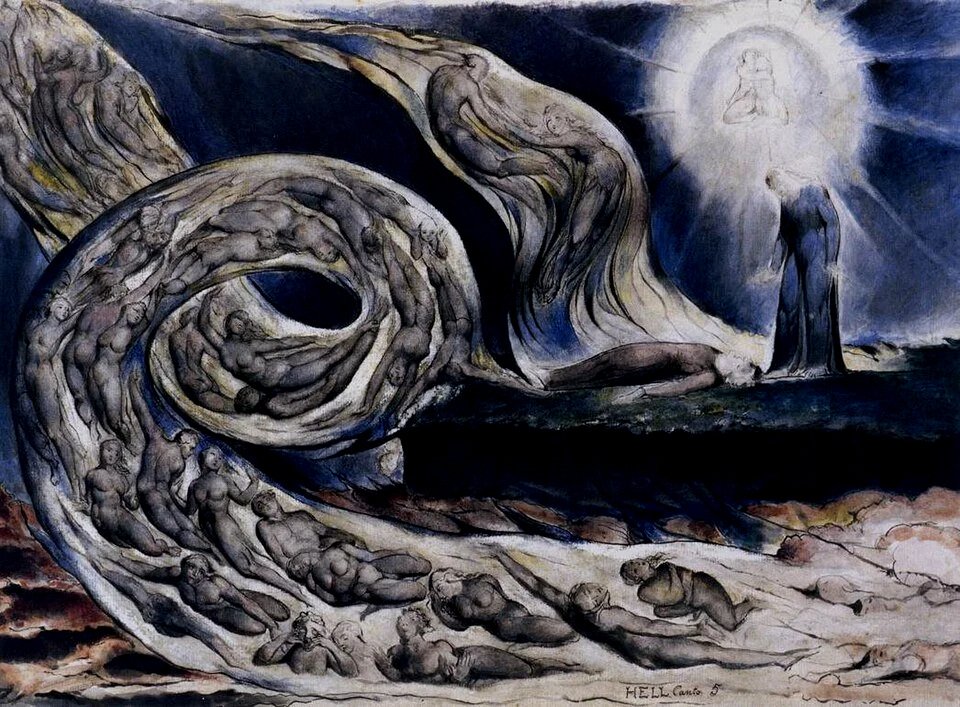
Water is also often associated with purification and rebirth. In Dante’s Divine Comedy, the River of Lethe is where Dante’s shortcomings are purged, forgotten and washed away, before he encounters the River of Eunoe, where he is purified and memories of his essential goodness are restored.
“When one dreams of baptising, taking a bath, the ocean, or in water generally - you must realise you are being pushed into the unconscious for purification; you have to go into the renewal because of the renewal.
”
PASSAGES TO THE UNDERWORLD AND WATER CREATURES
In Greek myth, bodies of water, such as the Lake of Lerna, were ways to enter into the underworld and meet the powerful creatures that dwelt therein.
“In the ancient Sumerian language, the word for water is also synonymous with the word for sperm, conception, and generation. The great Sumerian sea-mother is parthenogenic; she is both fertilising sperm and the moist, receiving womb; she is male-female, androgynous and undifferentiated, an image both of primal chaos and of the dark unformed world of the womb.
”
ORGANISING FLOW PATTERNS
Water has the quality of organising flow patterns, with beautiful vortex, polymorphic and rhythmic patterns we see in nature (Schwenk, 2007). Water has the ability to mediate relationships, perhaps why it is so powerful in birth. This quote below encapsulates this, in both the material properties of water and as a metaphor for childbirth and bonding.
“Water is capable of both freeing and bonding”
MYSTERY
Like the spiritual journey and longing towards the Divine, water is pregnant with great mystery. It is mysterious, and it is a catalyst for mystery. In the presence of water, we may touch some mysterious essence within us, which is eternal.
THE WATER ELEMENT
In many indigenous cultures and ancient medical systems, water is a key element in nature and the body. In Chinese Medicine, water is the element related seasonally to the depths of the winter, the most yin time of year when the energy in the environment retreats inwardly, this alludes to its relationship with the unconscious and primal memories. Water relates to the Kidney qi in the lower dantien energy centre, specifically to the yin aspect of the Kidney, while the yang aspect of the Kidney holds the fire, and is known as the Ming Men – the gate of vitality. The lower energy centre is where we connect to our sexual and primal energies in our body, and allow the power of the life force in Mother Earth to move through us during birth.
““Water is fluid, soft, and yielding. But water will wear away rock, which is rigid and cannot yield. As a rule, whatever is fluid, soft, and yielding will overcome whatever is rigid and hard. This is another paradox: what is soft is strong.” ”
FEAR, aWE aND yIELDING tO vASTNESS
In Chinese medicine the Kidney’s relate to the emotion of fear, the primal and existential fear which lives inside everyone who has a body! The Chinese understood that the Heart and Kidney had a deep relationship, where Love and Fear are an axis in the body. When we meet our love and fear in the body there is a capacity for the body to yield, to surrender, to become open, soft and supple. They understood that when the Heart (Love) opened to the Kidneys (Primal Fear), the experience of awe is possible. Awe is the experience of connecting to the vastness of our existence and the wonder and beauty in the universe. The experience of awe can be understood to be a transcendent experience, where we move beyond the the self interest of our ‘skin encapsulated ego’. Feeling awe is not limited to birth. We might experience awe during an ecstatic drumming ceremony, during devotional prayer, looking at the starry heavens, whilst listening to soulful singer pour their heart into music. Awe is like love, familiar to us and wondrously unique.
Labouring and Birthing in Water
There is a long history of water being used by labouring and birthing women prior to medicalisation of childbirth, whether this involved immersion or just the presence of a body of water nearby. Stories and memories have been passed down of indigenous peoples birthing in nature, near river beds or other natural pools and warm bodies of water.
The modern movement of labouring and birthing in water pools or baths in medical settings seems to have been particularly influenced by two obstetricians practicing in France. French obstetrician Frédérick Leboyer was an obstetrician practising from 1940’s to early 1970’s. Based on his awareness of his own birth trauma, and his many years of practice as an obstetrician in a highly medicalised system, he shifted his focus to writing about birth through the lens of the baby being born in his well-known book Birth Without Violence, 1975. He was interested in a baby’s sensitivity and the difficult transition from life in the womb onto earth (Leboyer, 1975). He used water as a healing medium to reduce the traumatic birth experience for the baby (Leboyer, 1975).
Another well-known French Obstetrician Michel Odent, working in a French state hospital in Pithiviers in the 1970’s, explored the potential of water to reduce caesarean births and promote a women’s natural birthing instincts. He observed that women seemed to gravitate towards the shower or bath when in labour, and thus hospital birthing pools came about.

Michel Odent, Credit Xavier Caré Wikimedia Commons
““I had a revelation the day a women gave birth on the floor before the pool was actually full. All she needed was to see the blue water.... For the first time I was able to see the importance of water as a symbol and the role it can play in human sexuality””
Benefits Water Immersion in labour and birth
SAFETY OF WATER IMMERSION IN LABOUR AND BIRTH
Labouring and birthing in water is considered safe for women who do not have complicated pregnancies and are well. An observational study conducted in Aotearoa-NZ observed that, of the 84% of women who used water immersion for labour and birth across all three birth settings, 74.3 % of Nulliparous women and 95.7% of Multiparous women had a spontaneous vaginal birth (Maude and Kim, 2020). The authors of this article recommend water immersion is a safe and simple way to reduce high medical intervention rates, and support women who want to have a spontaneous vaginal birth (Maude and Kim, 2020).
BENEFITS OF WATER IMMERSION
Some of the common benefits and ways water can help to promote physiological labour and birth include:
Natural pain relief and physiological relaxation with softening of ligaments, tendons, and muscles
Feeling safe and at peace within the self
Privacy in own womb-like space with boundaries
If there is darkness and silence, there is an ability to withdraw into inner world of the body - the instincts, emotions, and liminality (i.e. connecting to unconscious, entering brainstem and limbic system more so than neocortex) (Odent, 2014)
Warmth and flow of energy in the body
Calming of anxiety or fear
Opening of the Heart - Kidney connection in the body
Reduction in force of gravity - which reduces vestibular system and stimulation on the inner ear (Odent, 2014)
Less likely to have unwanted vaginal exams
Supports a women’s desire to have a spontaneous vaginal birth, reducing the cascade of medical intervention
Of course there are many variables that might influence what the experience is like for the mother and baby, for example the temperature of the water, the water quality, the vessel space and depth, the length of time spent in the water, the physical birthing environment, the relational field of the birthing environment and so forth. Michel Odent has observed that some women will get out of the water to birth their baby, and he concludes from a physiological perspective it is the change in temperature which contributes to a surge of adrenalin and the fetal ejection reflex (Odent, 2014).
Below is photo showing birth in water - and a lotus birth. A lotus birth is a term used to describe the process of allowing the umbilical cord to remain uncut from the placenta until it naturally separates.
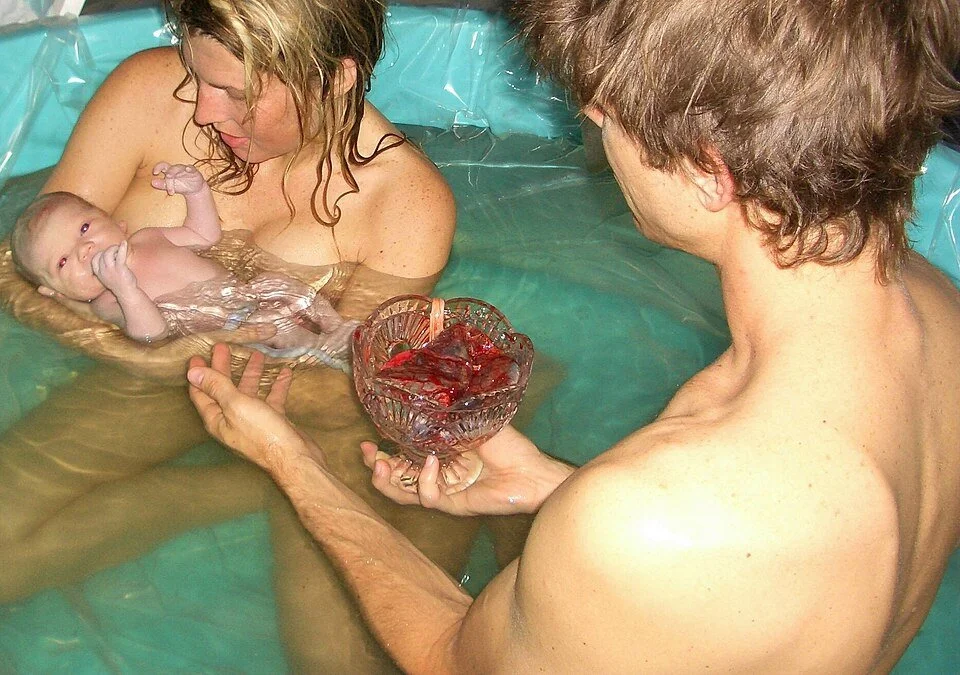
KellyPhD, CC BY-SA 3.0, via Wikimedia Commons
POTENTIAL cHALLENGES tO bIRTHING iN wATER
Some births may not be suited to birthing in water, for example if there are adverse complications for either the mother or baby there may be contraindications to labouring or birthing in water which will vary depending on maternity care guidelines being used. One of the main challenges has to do with the length of time spent labouring in the water. Obstetrician Michel Odent describes this in the passage below:
“It is not always understood that when a women is in established labour, immersion in water at body temperature tends to make uterine contractions more effective during a limited period of time - no longer than 2 hours. Today many women stay too long in the water, for the only reason that they are the prisoners of the project of giving birth under water.
”
In Chinese Medicine the reason for the 2 hour limit of labouring in water as Odent has observed, has to do with the balance between the yin and yang energy in the body. The balance of yin and yang energy in the body is relative to the individual birthing person. If we stay to long in the water, and we are relatively more yang deplete we are likely to lose energy or start to feel sensitive to temperature of the water cooling off. If we are relatively more yin deplete it’s likely the water will help us to relax more in labour, but we might be more sensitive to overheating or feeling frustrated when we feel stuck or in pain (Citkovich, 2020). Sometimes getting out of the water is necessary to be supported by gravity, or to feel a better temperature in the body to birth.
Neptune and Oceanic Oneness
In other articles, I have introduced the map of the psyche known as the Perinatal Matrices. The first Perinatal Matrix is BPM 1, which relates to our experience of life in amniotic waters growing in our mama’s womb during the 10 months of pregnancy, preceding the onset of labour. BPM 1 has been associated with Neptune, the astrological planet named after Poisedon, the Greek God of the Ocean. During our time in the womb we are bathed in amniotic waters, in a symbiotic relationship with our mama, experiencing a spiritual existence where we are not yet fully birthed into our earthly form. Birthing in water potentially allows for a soft transitional medium into life on earth for the baby, carrying the memory of positive BMP 1 matrix feelings into BMP 4 matrix of existence outside the womb. In this way, water can be understood to be a “threshold substance between animate and inanimate nature” (Schwenk, 2007).
If we look upwards at Neptune in the sky, we see that Neptune was in Sagittarius from 1970 – 1984 during the time labouring and birthing in water began to be used in maternity hospitals as an effective way to reduce medical interventions. Although birth was still highly medicalised during this time, it was also when the feminist movement and natural childbirth movement was growing, with some women questioning the kind of birth they wanted and their rights during childbirth. Neptune then moved into the watery regions of the heavens from 1984 - 2025 in the astrological signs of: Capricorn – symbol of sea goat (1984 – 1998), then Aquarius – symbol of the water bearer (1998 - 2012), then Pisces – symbol of the entwined fish ‘eros and aphrodite’ (2011 – 2025).
Although there is not adequate recording and statistical data tracking the number of water births globally since the 1970’s, it is probably fair to say there has been an increasing percentage of babies born into water, whether that is at home births or in maternity care settings. The UK Pool Cohort study of a relatively large data set (869,744 births) found 10% used water immersion during labour or birth, and 4.6% gave birth in water between 2015 - 2022 (Sanders et al, 2026).
Neptune is now in Aries, a fire sign symbolic of birth and new beginnings, where it will traverse until 2039. We are, as I write this, seeing severe heatwaves in parts of the world, with the ocean continuing to rapidly heat up and the topic of water scarcity a likely concern for future populations. I leave you with a question. For the cohort of babies still alive who have been birthed into water and the babies who are continuing to be birthed into water, what might this mean for them individually and collectively? How might their birth experience shape their relationship to water…. to love and fear?
Note to the reader: The information in this article is for educational purposes, to provide discourse for humanity to reflect on the experience of childbirth. The information in this article does not serve as professional or medical advice. Any errors are the author’s.
Article written by: Rose Skerten
REFERENCES
‘Abdu’l-Bahá. Paris Talks, 1911 - 1912. Baháʼí Publishing Trust, Eleventh Edition, 1969.
Citkovich C. Acupressure and Acupuncture During Birth: An Integrative Guide for Acupuncturists and Birth Professionals. Singing Dragon, 2020.
Greene L. The Astrological Neptune and The Quest For Redemption. Weiserbooks, 1996.
Leboyer F. Birth Without Violence. Healing Arts Press: 3rd Edition; 2009.
Maude RM, Kim M. Getting into the water: a prospective observational study of water immersion for labour and birth at a New Zealand District Health Board. BMC Pregnancy Childbirth. 2020 May 20;20(1): 312
Odent M. Water, Birth and Sexuality: Our Primeval Connection to Water and its use in Labour and Therapy. Clearview Books, 2014.
Sanders J, Barlow C, Brocklehurst P et al. Characteristics of Women, Intrapartum Interventions, and Maternal and Neonatal Outcomes Among Users of Intrapartum Water Immersion: The UK POOL Cohort Study. Birth, 2026, 53: 55-66. https://doi.org/10.1111/birt.12921
Schwenk W. The Hidden Qualities of Water. Floris Books: Edinburgh; 2007.
Young A, Brown LK, Ennis S, Beattie RM, Johnson MJ. Total body water in full-term and preterm newborns: systematic review and meta-analysis. Arch Dis Child Fetal Neonatal Ed. 2021 Sep; 106(5): 542-548