Content Notice: Please note this article below contains information about childbirth. For some people, childbirth is associated with traumatic memories. If anything conveyed in this article touches a sensitive place for you, please know there are therapeutic support options to heal and process past birth experiences or perinatal loss.
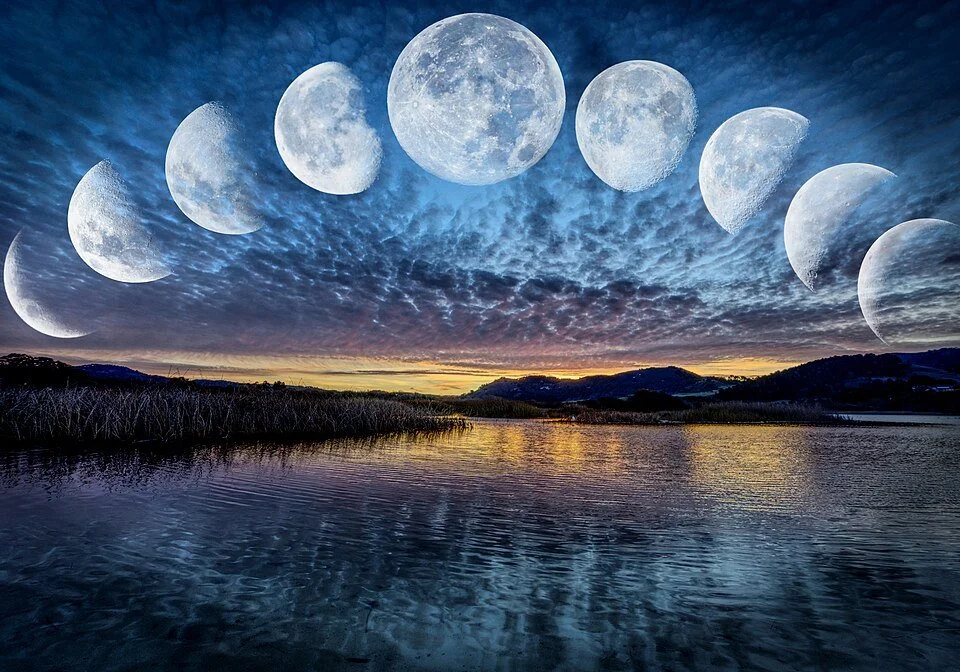
Moon Phases Over Carmel River by Guy Churchward, CC BY 2.0, via Wikimedia Commons
The Moon is the earth’s most intimate celestial body. She waxes and wanes, shifting the fluid in our body and on earth. She is our great mirror, reflecting the light of the sun to us. She is the luminous body that guides us during the night. From earth, we only ever see the same face of the moon, her dark side remains invisible to us. A metaphor perhaps, of the familiarity or her face and phases, and by extension the familiarity of our mothers face. Sadly, the Moon is devalued in our industrialised and technology focused world, where the night sky is flooded with artificial light. The Solar archetype looms large in our current culture and psyche, subjugating the needs and feelings of our Moon. This creates problems in the way we participate in birth, interfering with the need for mammalian childbirth to be “quiet, safe and unobserved” (Buckley, 2008).
In this article, I will begin by offering poetry as a way to feel the Moon’s presence in birth. I will then introduce the basic archetypal principles of the Moon, the importance of rhythm and attachment in early life. The article will also introduce some lunar goddesses, and briefly explore the Moon’s phases in shaping our lunar psychology.
FEELING THE MOON
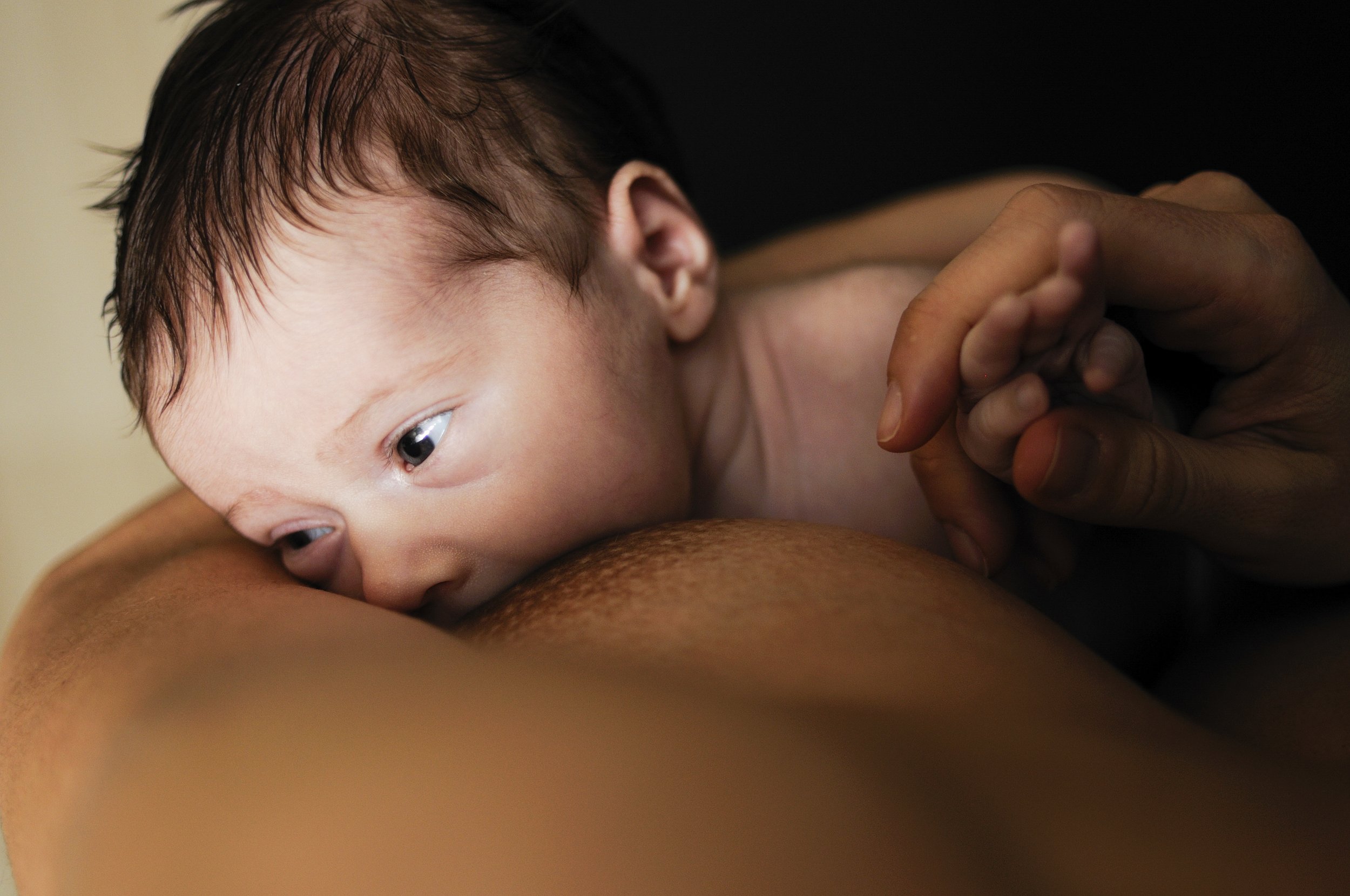
Mama’s inner soliloquy
Between my body’s tender pores and her’s
The spider web
Of skin-skin
Weaves love
We syncronise our hearts
My nourishing milk
flows freely
Baby to Mama
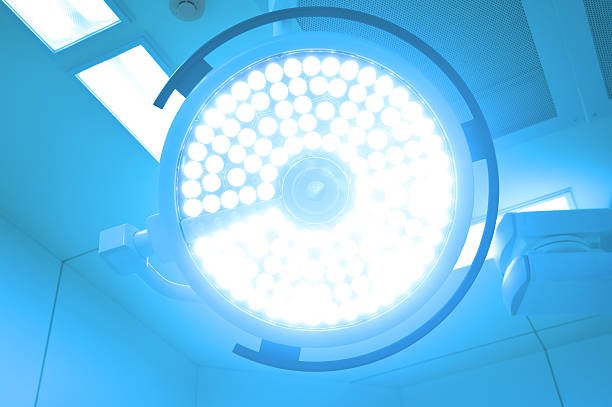
It was so dark in your womb
Why these bright lights?
Flooding out
Our beautiful moon
My heart is distressed
Mama I need you so close
Why do you leave me alone?
I leave my body
when you leave me alone
I feel bereft
unsafe
Without your heart
Close to mine
Credit: nimon_t (istock)
Midwife’s inner soliloquy
In these hospital walls
I cannot feel
Stimulating light, people, machines
Crystallise me to stone
I swallow down my emotions
For a later night
When I am in a mama’s home
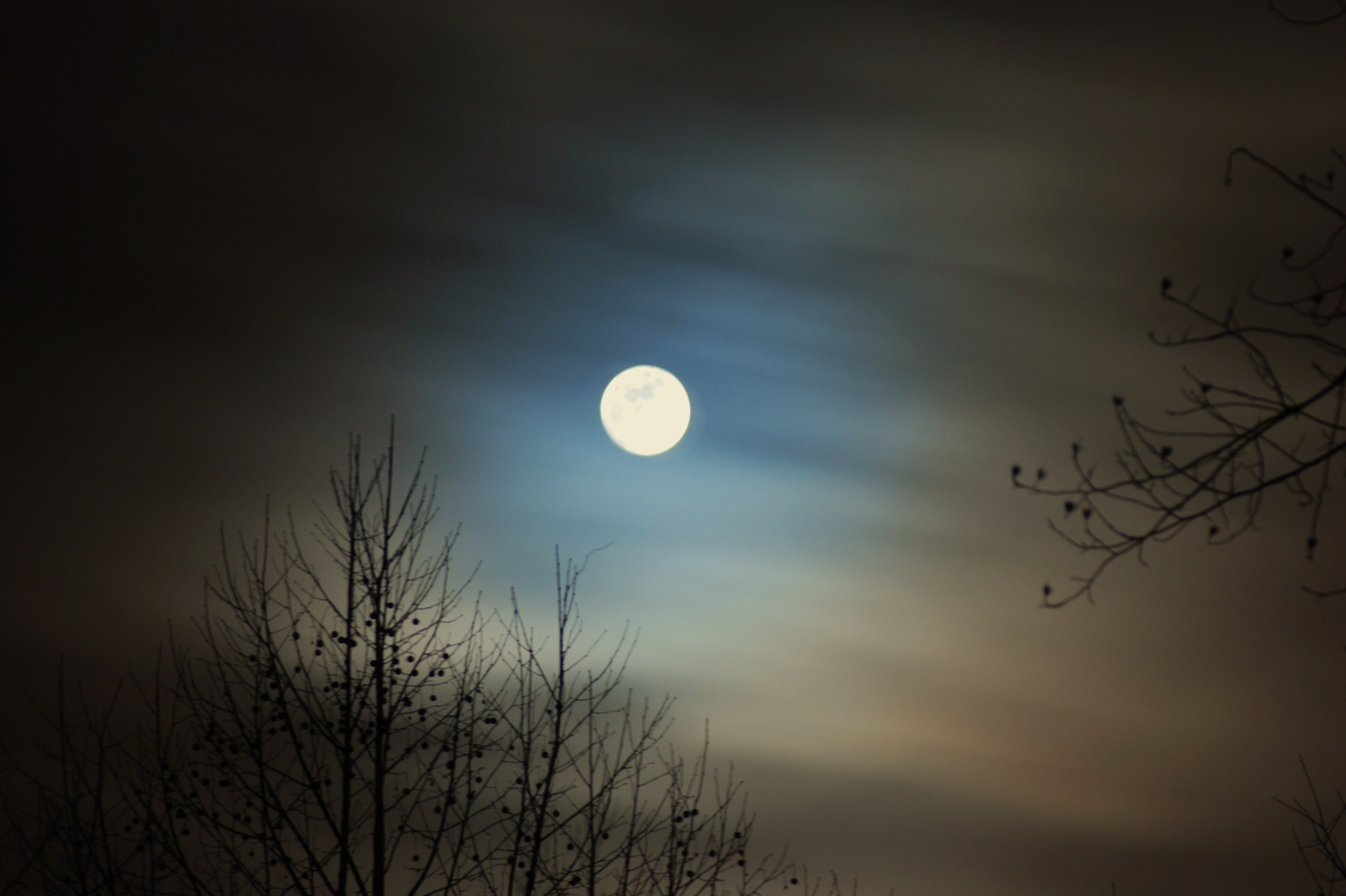
Moon guides my way
I wait
Do nothing
Listening with ears
Filled with wisdom
My heart overflows
With feeling
With rhythm
With tenderness
For birth’s wonder
Full Moon by DWRose, CC BY 2.0, via Wikimedia Commons
Archetypal Principles of the Moon
In Hellenistic astrology, there are seven visible celestial bodies, known as the “wandering stars” : these include the Moon and Sun - the two luminaries, Mercury, Venus, Mars, Jupiter and Saturn. The Moon in astrology and mythology is known to be associated with the following archetypal principles or qualities: mother, the great mother, mother-child dyad, the lunar goddesses, the eternal circle, the reflector of the sun’s light, rhythm, connection and interdependence, the womb, fertility and conception, fertile ground of mother earth, the nocturnal, material being, our physical body, instincts, feelings, emotions and needs, the instinctual need to survive and to bond as mammals, the way we learn how to form attachment bonds, emotional mirroring and empathy, ‘feeling felt’, the memories in our body of relational attunement and misattunement, nurturing and nourishment, reflection and receiving, home, family and ancestral roots, breastfeeding and caring for the young, the collective gathering of the people, rhythmic movement of fluid in our body and on Mother Earth, the metal silver (Brennan 2017; Tarnas, 2006).
Public domain, via Wikimedia Commons
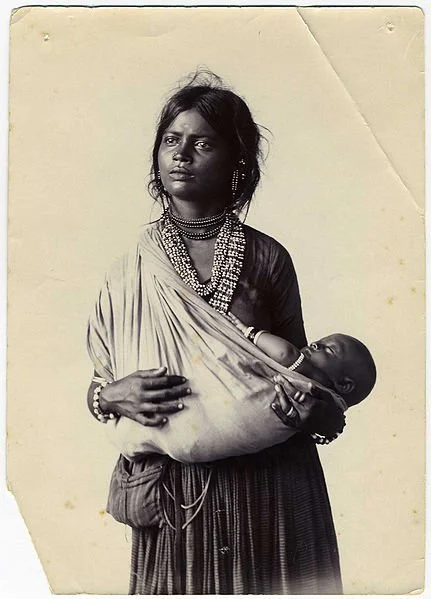
Above is a vintage photograph from India, symbolising the Mother - Child archetype. In myths from different cultures, we also see the Mother - Child archetype in those who were raised and suckled by foster mothers, such as the dyad of Yashoda - Krishna in Indian culture, or Amalthea - Zeus in Greek myth.
In ancient Hellenistic (Greek) tradition, the Moon was related to various parts of the body including: the left eye, the stomach, the breasts, the breath, the spleen, the membrane which encloses the brain, and the marrow (Brennan, 2017). In Chinese medicine and philosophy the moon is considered yīn, related to the night.
rHYTHM AND ATTACHMENT
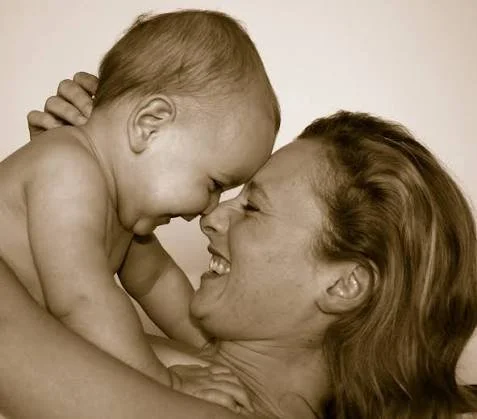
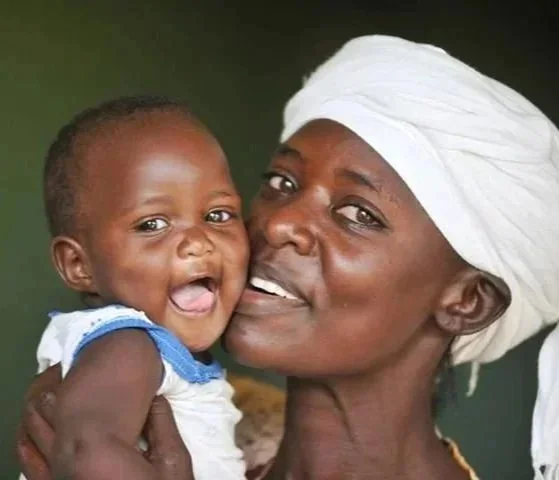
An important principle of the Moon is the rhythmic presence of our caregivers and the experience of attachment we receive in the early years of our life. A foundational need of a baby growing in the womb and in the first 2 - 3 years of life is to develop a relationship of safety, love and secure attachment with their mama or primary caregiver(s). We carry with us throughout our life, this early experience of relational attachment in our body. The person who predominantly provides safety and protection for the baby, helps the baby to regulate their emotions, to calm them when they are hyper-aroused, to offer deep connection through ‘quiet love’, and to engage them in up-regulating joyful connection may be considered the primary attachment person for the early years of the child’s life (Schore, 2019). The person who carried the child in their womb and birthed the child, also develops a very deep primal bond with the child. In some cases, this person may not be able to continue to bond with the baby in the early years which can be due to many reasons (e.g. illness or trauma, death, family violence, separation, adoption e.t.c.).
Neuroscientific research is showing that relational attachment patterns begin in the womb and continue to be shaped in the critical window of first 2- 3 years of life (Schore, 2019). This is predominantly the pre-verbal phase of life, dominated by the right hemisphere of the brain which helps us to feel embodied, emotionally receptive, empathic, and see the whole picture and inter-connectedness within all life (McGilchrist, 2009). There is clear scientific evidence for skin-skin connection and Kangaroo Mother Care in early life in improving baby survival, reducing physiological stress in mama and baby, improving weight gain and reducing the length of stay in hospitals for pre-term babies (WHO Immediate KMC Study Group, 2021; Sivanandan and Sankar, 2023).
Robert Whitehead, CC BY 2.0, via Wikimedia Commons
USAID in Africa, Public domain, via Wikimedia Commons
As a baby continues to grow, they need their mother or primary caregiver’s right hemisphere to sufficiently mirror their inner emotional experience, and to co-regulate through touch, empathy, heart rate, eye contact, facial expression, voice melody and prosody (Schore, 2019). This is necessary in order for secure attachment to occur. If this is not sufficiently provided for, baby is likely to develop challenges in inhabiting their body with safety (i.e. embodiment), and in processing their emotions, either on their own or inter-relationally (Schore, 2019). Attachment patterns such as anxious-ambivalent, disorganised, or avoidant, are known to be shaped in early years of life, persisting through youth into adulthood, and playing out in adult relationships (Schore, 2019).
lUNAR GODDESSES aND GODS
There are many lunar goddesses throughout the world’s myths and cosmologies, which we may feel connected to. Some include: Hina the polynesian lunar goddess in her various forms, e.g. Hine-te-iwaiwa the Māori Goddess associated with the art of weaving and childbirth, Chang'e the Chinese Lunar Goddess, Greek Lunar Goddesses - Artemis, Selene, Hecate, Luna the Roman Goddess, Olapa the Maasai Lunar Goddess, Maya the Mesoamerican Lunar Goddess, and Xochiquetzal the Astec Lunar Goddess. In some traditions, the moon was also consider in the masculine form, such as Chandra in Indian mythology, and Sin in Mesopotamian culture.
THE GREEK lUNAR GODDESSES AND PHASES OF THE MOON
When you are born, the Moon is in a particular zodiac sign (e.g. in western astrology, Moon in Pisces, Moon in Cancer e.t.c), a particular place/house in your birth chart. The Moon can also be in relationship with other planets (e.g. aspect patterns). All of these astrological factors influence the particular qualities of your Moon and the way you experience the Moon in your life. Additionally, the Moon will be in a particular phase of her great cycle when you are born (e.g. New Moon, Cresent Moon, First Quarter, Full Moon, Last Quarter, Balsamic, Dark Moon e.t.c), which adds another layer to the way you experience the moon in your life. As the Moon is the reflector of the Sun’s light, the relationship between the Sun and the Moon tells us which phase of the moon we are born under. So, if you know your Sun sign and Moon sign you can learn the phase of the moon your were born under.
gODDESS ARTEMIS : THE CRESCENT NEW MOON
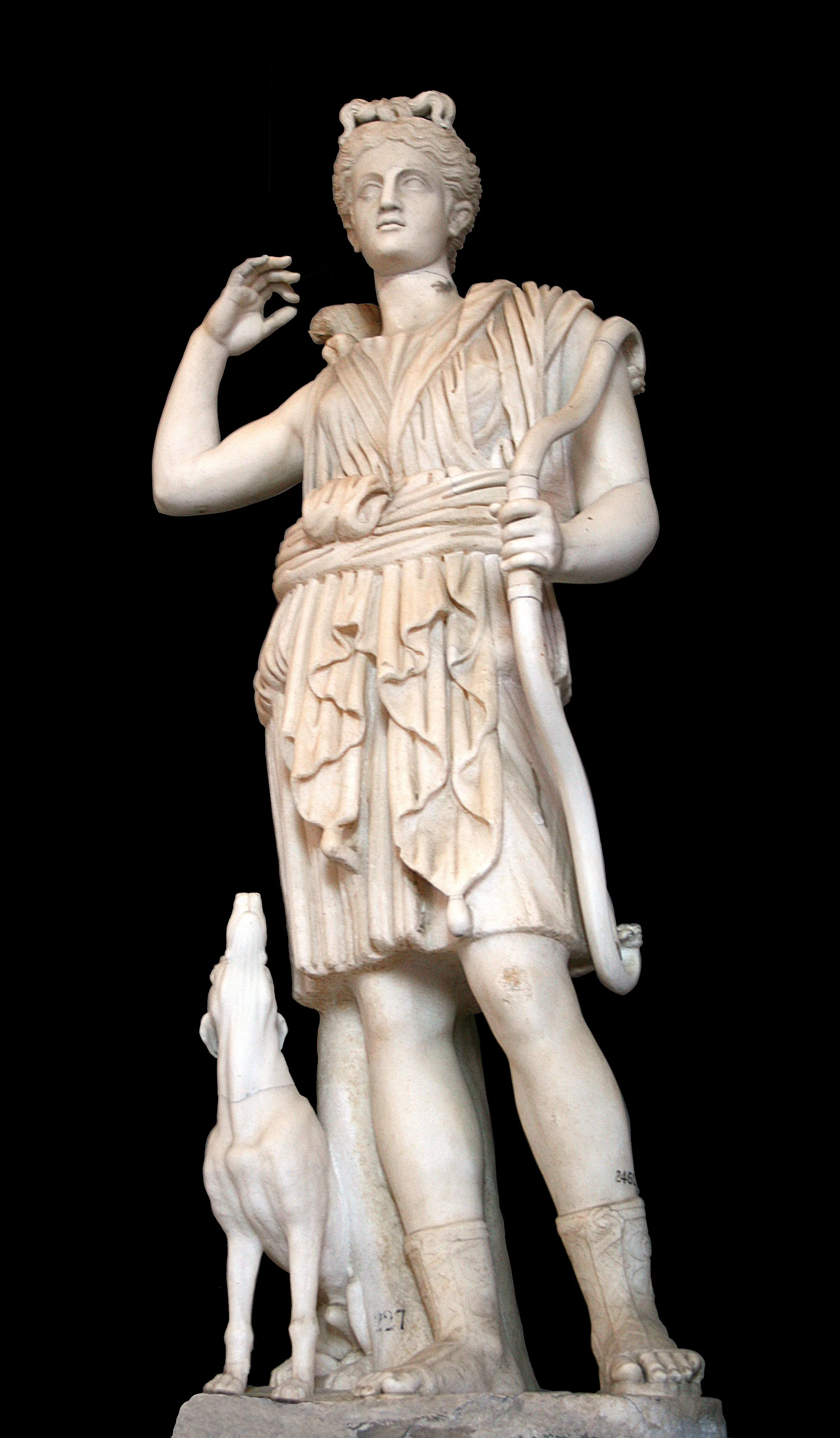
Goddess Artemis is associated in myth and astrology with the archetype of the Maiden. She relates to the crescent moon, the new waxing phase of the moon. Some of the qualities she can symbolise include: freshness, new beginnings, initiation into new life, the delicate and vulnerable process of emerging into new form, innocence, the trauma of intimate relational betrayal, adventure, wild and untamed, creativity and youthful wisdom. She has been associated with childbirth and the midwife archetype through the story of her own birth and her midwifery skills in helping to birth her twin sibling Apollo.
Artemis by Jean-Pol Grandmont, CC BY-SA 3.0, via Wikimedia Commons
GODDESS SELENE : tHE FULL MOON
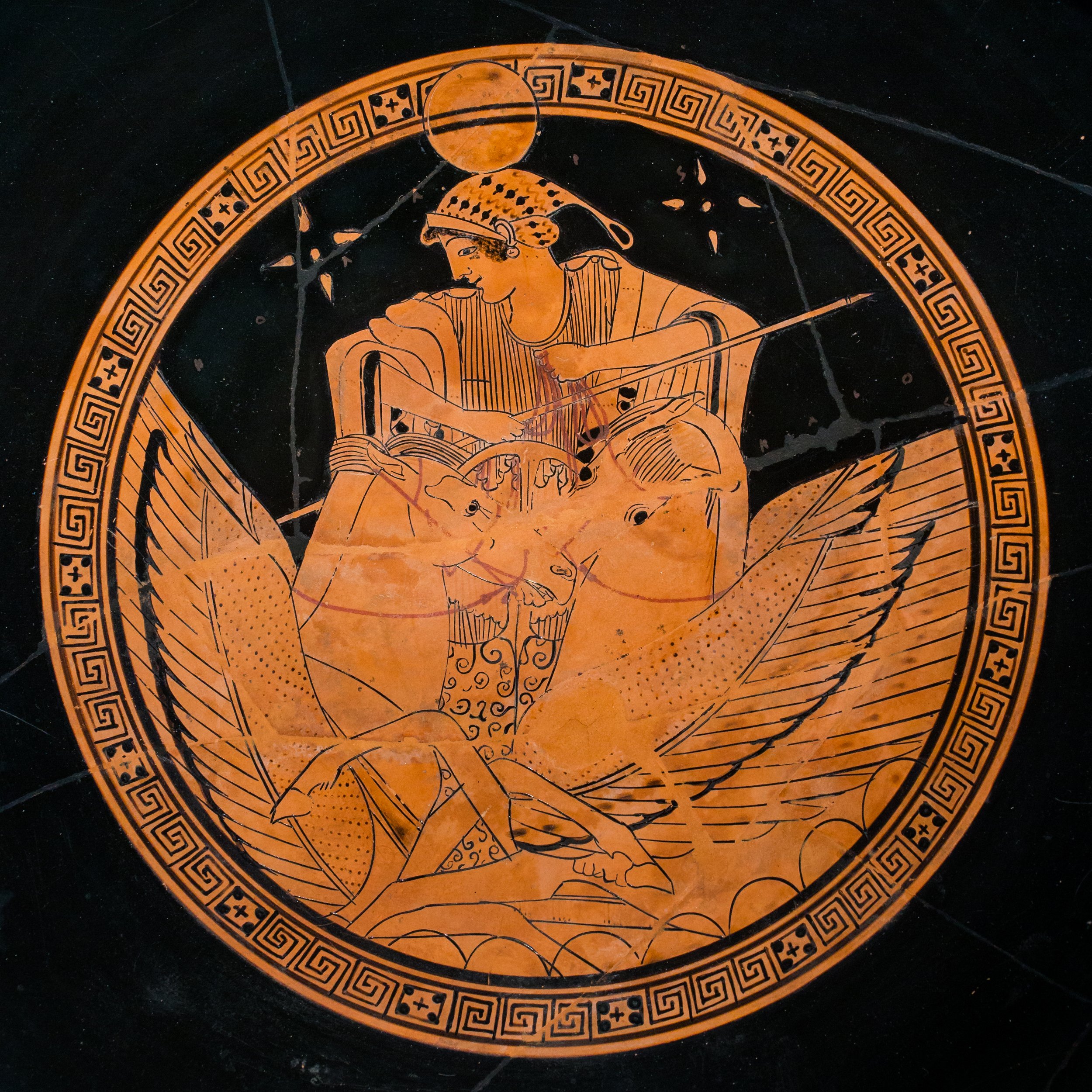
Goddess Selene is associated in myth and astrology with the archetype of the Mother and the full moon. She symbolises the initiatory experience of motherhood, the peak potential of fertility, the fullness and ripeness of seeds sown at the new moon. In the full cycle of a women’s life this is the midway point around 28 years. In Chinese medicine a girl/women is said to develop in cycles of 7 years, where at 28 years she reaches full potential of blood and qi in her body for fertility, birth and breastfeeding (Rochat de la Vallée, 2007). There is an association between 28 years, the length of the lunar cycle ~ 28 days, and reality of life on earth within the constraints of time and matter. This relates to the archetypal principle of Saturn, and the cycles of Saturn in our life.
To learn more about Saturn in relation to birth and life, this article discusses Saturn a little more. Perinatal Matrices in Life.
Selene by ArchaiOptix, Public domain, via Wikimedia Commons
GODDESS HEKATE : THE BALSAMIC OR DARK MOON
Goddess Hekate is associated in myth and astrology with the archetype of the Crone or Wise Women. She is associated with the Balsamic or Dark Moon, the waning phase of the moon before a new cycle begins. This phase of the moon cycle pertains to: surrendering and letting go, composting what is not longer needed, initiation into the night or one’s darkness, the wisdom of the past. In the image to the right, Hekate is shown as a triple headed Lunar Goddess. She symbolises deep wisdom, roads, cross-roads, thresholds, initiation, help and protection for those traversing the underworld, the capacity to deeply hear and listen. Hekate represents the the midwife archetype who carries deep wisdom inside of her.
“Hekate, who has traditionally been represented with three heads, keeps us looking and listening in many ways at once.”
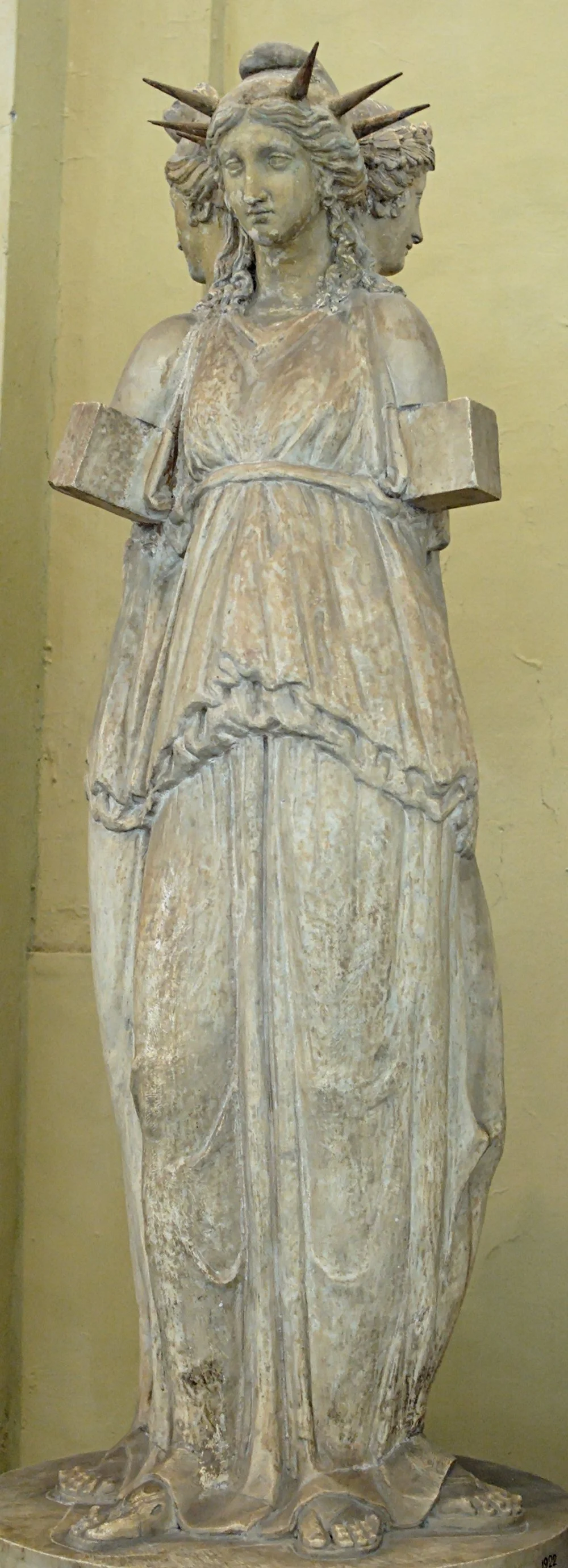
Hecate. Vatican Museums, Public domain, via Wikimedia Commons
In birth, the different lunar archetypes can show up intrapsychically within the women giving birth/birthing person, within those attending the birth, as ancestors, and within the soul(s) being born. As well, there are relational fields created in birth, so the lunar archetypes can show up as interpersonal dynamics between those attending the birth.
I hope this article inspires you to feel and connect to the Moon, and reflect on how she was present during your birth, or birthing experience, or in the current rhythms of your life.
Note to the reader: The information in this article is for educational purposes, to provide discourse for humanity to reflect on the experience of childbirth. The information in this article does not serve as professional or medical advice. Any errors are the author’s.
Article written by: Rose Skerten
REFERENCES
Brennan C. Hellenistic Astrology: The Study of Fate and Fortune. Denver, CO: Amor Fati Publications, 2017
Buckley S. Gentle Birth, Gentle Mothering: A Doctor's Guide to Natural Childbirth and Gentle Early Parenting Choices, 2008
Hillman J. The Dream and The Underworld. New York, HarperCollins Publishers, 1979
McGilchrist I. The Master and His Emissary: The Divided Brain and the Making of the Western World. London: Yale University Press, 2009
Rochat de la Vallée E. The Essential Women: Female Health and Fertility in Chinese Classical Texts. Monkey Press, 2007
Schore A. Right Brain Psychotherapy. New York, W.W. Norton & Company, 2019
Sivanandan S, Sankar MJ. Kangaroo mother care for preterm or low birth weight infants: a systematic review and meta- analysis. BMJ Global Health 2023; 8:e010728.
Tarnas R. Cosmos and Psyche: Intimations of a New World View. London: Penguin Group, 2006
WHO Immediate KMC Study Group. Immediate “Kangaroo Mother Care”and Survival of Infants with Low Birth Weight. N Engl J Med 2021; 384:2028-38.